


By NAN
The Independent National Electoral Commission (INEC) has declared that the 2027 General Election presents a historic opportunity to rewrite Nigeria’s electoral history and set a new benchmark for election management in Africa.
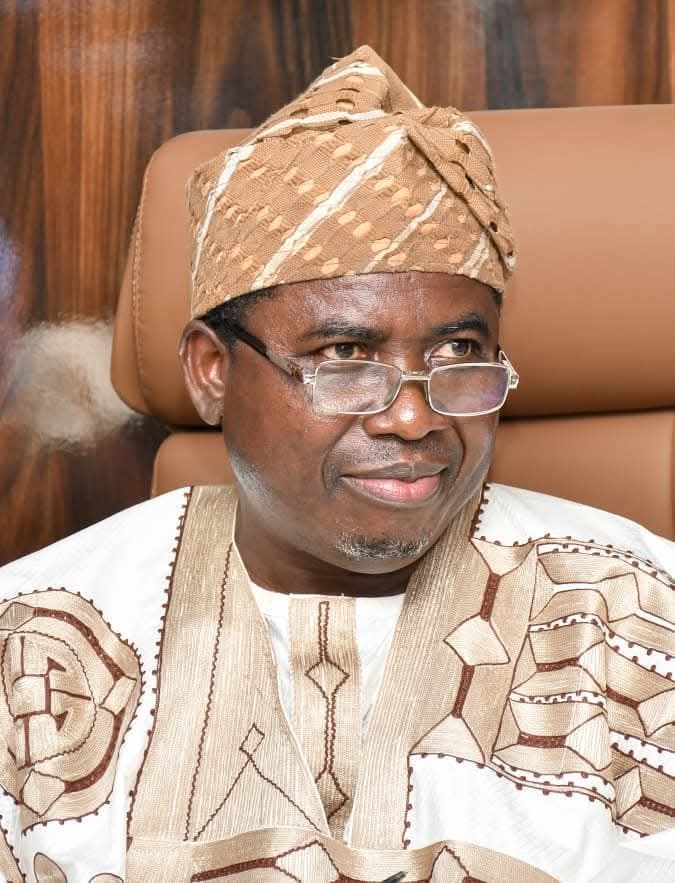
INEC Chairman, Prof. Joash Amupitan, stated this on Friday in Lagos while delivering his opening address at the Commission’s 2026 Induction and Strategic Retreat for its leadership and senior officials.
The News Agency of Nigeria (NAN) reports that the retreat brought together National Commissioners, Resident Electoral Commissioners (RECs), administrative secretaries, directors and top management staff from the 36 states and the Federal Capital Territory (FCT).
According to Prof. Amupitan, the Commission is under intense national and continental scrutiny, with over 200 million Nigerians and the wider African community watching its actions ahead of the 2027 polls.
“We have a golden opportunity to rewrite the history of elections in Nigeria,” he said. “Our goal is clear: the 2027 General Election must be free, fair and credible, and must stand as a watershed moment in Nigeria’s democratic journey.”
He stressed that INEC must go beyond meeting minimum standards by building an institution that is globally recognised for integrity, technological efficiency and democratic values.
“Let it be said that under our watch, INEC became the best Election Management Body in Africa — a beacon of integrity, a model of technological efficiency, and a fortress of democratic values,” the chairman said.
Amupitan emphasised that the 2027 elections must be technologically driven, transparent and beyond reproach, adding that they should serve as a continental standard and proof that INEC can conduct world-class elections.
He outlined five non-negotiable pillars guiding the Commission’s mandate: elections free from interference, fairness to all political parties and candidates, credibility at both national and international levels, transparency across all processes, and inclusiveness for all Nigerians regardless of physical ability or location.
The INEC chairman also noted that the 2027 elections would be shaped by a new demographic of young, first-time voters who are digitally savvy and demand real-time transparency.
“It is our duty to prove to these tech-savvy and often sceptical young voters that INEC can be trusted,” he said, adding that credible technology and inclusive systems would help secure their long-term confidence in the electoral process.
Reaffirming his commitment to the legal framework of elections, Amupitan said the Commission would apply the 2022 Electoral Act and its amendments with “surgical precision.”
“Under my leadership, the rule of law is not a suggestion; it is our operating system,” he declared.
On staff welfare, the chairman promised to provide the necessary tools and enabling environment for success, while warning that any compromise of the Commission’s values or processes would attract strict consequences.
“There is no room for misconduct, whether by omission or commission,” he warned.
Prof. Amupitan further disclosed that ahead of the 2027 General Election, INEC would conduct several critical polls, including the FCT Area Council Elections in February 2026 and the off-cycle governorship elections in Ekiti and Osun states, which he described as testing grounds for the Commission’s preparedness.
He said the retreat would deliberate on 17 thematic areas, including logistics, voter registration, election security, political party regulation and inter-agency collaboration, aimed at strengthening INEC’s operational capacity.
In his welcome address, the Lagos State Resident Electoral Commissioner, Prof. Ayobami Salami, described the induction and orientation retreat as timely and strategic.
According to him, the retreat provides a vital platform for reflection, strategic alignment, leadership development and institutional consolidation as the nation prepares for the 2027 General Election.
“Public expectations of the electoral process are higher than ever, and we must not drop the ball,” Salami said, stressing the importance of early planning, coordination and institutional cohesion.
He added that beyond technical sessions, the retreat also offers opportunities for peer engagement and cross-fertilisation of ideas to strengthen the Commission as a cohesive body.